
Pension Withdrawal in Ireland: Rules, Options & What You Need to Know
If you’re thinking about accessing your pension, it’s important to understand the rules around pension withdrawal in Ireland.
While pensions are designed to provide income in retirement, there are situations where you may be able to take money from your pension — either as a lump sum or as regular income.
In this guide, we explain when you can withdraw your pension, how it works, and what to consider before making a decision.
What’s in this guide?
How Pension Withdrawal Works in Ireland
Can You Withdraw Your Pension in Ireland?
When Can You Access Your Pension in Ireland?
Your Pension Withdrawal Options in Ireland
How Much of Your Pension Can You Take as a Lump Sum?
Tax on Pension Withdrawals in Ireland
Can You Withdraw Your Pension Early?
What Happens If You Cash In Your Pension?
Common Mistakes When Withdrawing a Pension
Should You Withdraw or Leave Your Pension?
How to Apply for Pension Withdrawal in Ireland
Need Help Understanding Your Pension Options?
Useful Links / Documents
FAQs About Pension Withdrawal in Ireland
How Pension Withdrawal Works in Ireland
To withdraw your pension in Ireland, you generally need to meet certain conditions and follow these steps:
- You can usually access your pension from age 60 (depending on your scheme)
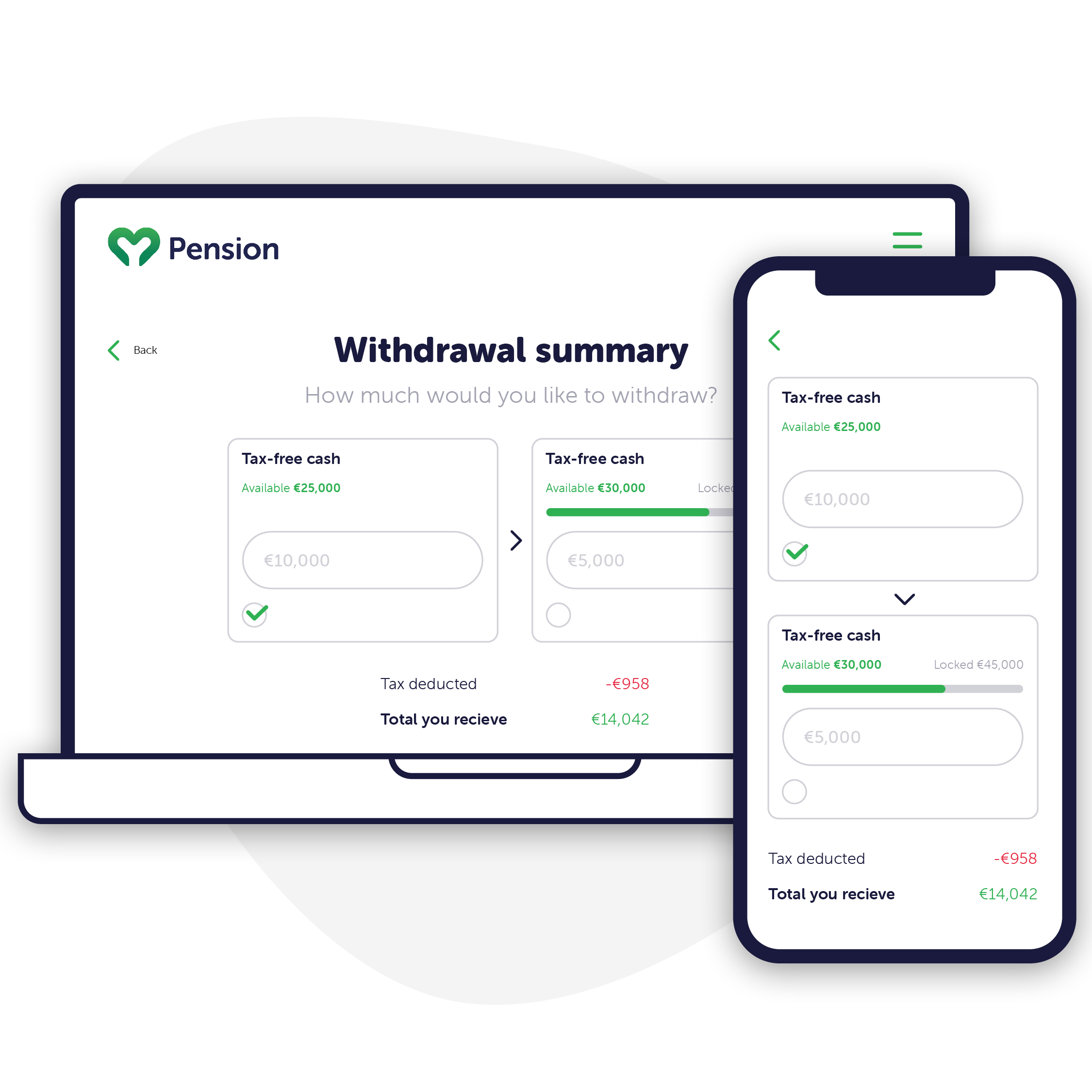
- You may take part of your pension as a tax-free lump sum
- The remaining balance can be used to provide retirement income
- Withdrawals are typically subject to income tax, USC and PRSI
- Early access is limited and depends on your circumstances
Can You Withdraw Your Pension in Ireland?
Yes, you can withdraw your pension in Ireland, but access is restricted and depends on your individual circumstances.
Pensions are designed as long-term retirement savings, so they are not typically accessible like a regular savings account. Most people can only access their pension when they reach retirement age or when they leave employment, depending on the type of pension they have.
It’s also important to note that different pension types (such as occupational pensions or personal pensions) may have slightly different rules, so understanding your specific scheme is key before making any decisions.
Can You Withdraw Your Pension in Ireland?
Yes, you can withdraw your pension in Ireland, but access is restricted and depends on your individual circumstances.
Pensions are designed as long-term retirement savings, so they are not typically accessible like a regular savings account. Most people can only access their pension when they reach retirement age or when they leave employment, depending on the type of pension they have.
It’s also important to note that different pension types (such as occupational pensions or personal pensions) may have slightly different rules, so understanding your specific scheme is key before making any decisions.
When Can You Access Your Pension in Ireland?
Understanding when you can access your pension in Ireland is essential for effective retirement planning, as the rules vary depending on your pension type and employment status. In most cases, you can begin drawing down your pension benefits from age 60, although some occupational pensions allow earlier access in situations such as early retirement or ill health. Personal pensions, including PRSAs, generally offer flexibility, but access is still typically linked to retirement or reaching a specified age. Knowing your options in advance can help you maximise tax efficiency, secure a stable income, and avoid costly mistakes.
Standard Retirement Age in Ireland
For many individuals, pension access begins between ages 60 and 65, depending on the scheme rules. Occupational pensions are often tied to your employer’s normal retirement age, while personal pensions may offer slightly more flexibility. It’s important to review your specific policy to understand exactly when you qualify to withdraw funds.
Early Access to Your Pension
In certain circumstances, you may be able to access your pension before the standard retirement age. This can include early retirement agreements, redundancy, or serious ill health. However, early access may come with restrictions, reduced benefits, or tax considerations, so careful planning is crucial.
Accessing State Pension Benefits
The State Pension (Contributory) is typically available from age 66, provided you meet the required PRSI contribution conditions. This pension is separate from private or occupational pensions and forms a core part of retirement income for many people in Ireland.
Tax Considerations When Accessing Your Pension
When you access your pension, you can usually take a portion as a tax-free lump sum, but the remaining funds are subject to income tax, USC, and PRSI where applicable. Understanding these tax implications in advance can help you structure your withdrawals in the most efficient way and protect your overall retirement income.
Your Pension Withdrawal Options in Ireland
Pension withdrawals in Ireland are governed by clear but often misunderstood rules, making it essential to understand how and when you can access your retirement savings. Whether you have a personal pension, PRSA, or occupational scheme, the withdrawal process typically begins from age 60 and involves a combination of tax-free cash and taxable income options. Most retirees can take up to 25% of their pension fund as a tax-free lump sum, with the remaining balance used to generate income through an Approved Retirement Fund (ARF), an annuity, or a taxable lump sum. Choosing the right withdrawal strategy is crucial, as it directly impacts your long-term financial security, tax efficiency, and flexibility in retirement.
Tax-Free Lump Sum Explained
One of the most attractive features of pension withdrawals in Ireland is the ability to take a portion of your fund tax-free. Generally, you can withdraw up to 25% of your pension as a lump sum, subject to lifetime limits set by the Revenue Commissioners. Any amount above these limits may be taxed, so careful planning is key to maximising this benefit.
Approved Retirement Funds (ARFs) vs Annuities
After taking your lump sum, you must decide how to use the remaining balance. An Approved Retirement Fund (ARF) allows you to keep your pension invested while drawing down income as needed, offering flexibility and potential growth. Alternatively, an annuity provides a guaranteed income for life, giving security but less control over your funds.
Taxation on Pension Withdrawals
While the initial lump sum can be tax-free, all subsequent withdrawals are typically subject to income tax, USC, and PRSI depending on your circumstances. Understanding how these taxes apply can help you avoid unexpected liabilities and structure your withdrawals more efficiently.
Choosing the Right Withdrawal Strategy
The best approach depends on your financial goals, health, and risk tolerance. Some retirees prefer the flexibility of an ARF, while others value the certainty of a fixed income. In many cases, a combination of both options can provide a balanced and tax-efficient retirement plan.
How Much of Your Pension Can You Take as a Lump Sum?
Tax on Pension Withdrawals in Ireland
Understanding the tax on pension withdrawals in Ireland is crucial if you want to protect your retirement income and avoid unexpected liabilities. While pensions offer valuable tax advantages during the saving phase, withdrawals are subject to specific tax rules that can significantly impact how much you actually receive. Typically, you can take a portion of your pension as a tax-free lump sum, but any remaining funds you draw down are treated as income and taxed accordingly. The Revenue Commissioners oversees these rules, applying Income Tax, Universal Social Charge (USC), and Pay Related Social Insurance (PRSI) where applicable. Knowing how these taxes work—and planning your withdrawals carefully—can help you maximise your pension and retain more of your hard-earned savings.
Income Tax on Pension Drawdowns
Once you move beyond your tax-free lump sum, all pension withdrawals are generally subject to standard income tax rates. The amount you pay will depend on your total annual income, meaning large withdrawals in a single year could push you into a higher tax bracket.
USC and PRSI Considerations
In addition to income tax, pension withdrawals may also be liable for USC, and in some cases PRSI, depending on your age and circumstances. These additional charges can reduce your net income, so it’s important to factor them into your retirement planning.
Tax-Free Lump Sum Rules
Most retirees can take up to 25% of their pension fund as a tax-free lump sum, subject to lifetime limits. Any amount above the tax-free threshold may be taxed at a standard rate, making it essential to understand how much you can withdraw without triggering additional tax.
How to Minimise Tax on Your Pension
Strategic planning is key to reducing your overall tax burden. Spreading withdrawals over multiple years, combining income sources efficiently, and choosing the right drawdown option—such as an Approved Retirement Fund (ARF) or annuity—can all help improve tax efficiency and preserve your retirement wealth.
Can You Withdraw Your Pension Early?
What Happens If You Cash In Your Pension?
Common Mistakes When Withdrawing a Pension
Withdrawing your pension in Ireland is a major financial decision, yet many people make costly mistakes that can significantly reduce their retirement income. From taking large lump sums too quickly to misunderstanding tax liabilities, these errors can lead to unnecessary losses and long-term financial strain. Pension withdrawals are governed by rules set by the Revenue Commissioners, and failing to plan properly can result in higher taxes, reduced investment growth, and an unsustainable income in later years. By understanding the most common pitfalls and avoiding them, you can make smarter decisions that protect your pension and maximise your retirement benefits.
Taking Too Much Too Soon
One of the biggest mistakes is withdrawing large amounts early in retirement. While it may be tempting to access a significant lump sum, this can quickly deplete your pension fund and leave you short of income in later years.
Ignoring Tax Implications
Many retirees underestimate how much tax they will pay on withdrawals beyond the tax-free lump sum. Large withdrawals in a single year can push you into a higher tax bracket, reducing the overall value of your pension.
Not Having a Withdrawal Strategy
Failing to plan how and when to withdraw your pension can lead to inconsistent income and missed opportunities for tax efficiency. A structured approach—spreading withdrawals over time—can help maintain financial stability.
Overlooking Inflation and Longevity
People often forget that retirement can last decades. Without accounting for inflation and increasing life expectancy, you risk running out of money later in life.
Failing to Seek Professional Advice
Pension rules and tax regulations can be complex. Not seeking expert guidance can lead to avoidable mistakes, whereas professional advice can help you optimise your withdrawals and secure a more stable financial future.
Should You Withdraw or Leave Your Pension?
Deciding whether to withdraw your pension or leave it invested in Ireland is a critical choice that can shape your financial future in retirement. While accessing your pension can provide immediate cash and flexibility, leaving it invested—such as in an Approved Retirement Fund (ARF)—allows your savings to continue growing tax-efficiently over time. The right decision depends on factors like your income needs, life expectancy, tax position, and overall financial goals. Pension withdrawals are regulated by the Revenue Commissioners, and making the wrong move could result in unnecessary tax, reduced long-term income, or missed investment growth. A well-planned strategy can help you strike the right balance between accessing funds now and preserving wealth for the future.
Benefits of Withdrawing Your Pension
Withdrawing your pension can give you immediate access to a tax-free lump sum and provide funds for major expenses, debt repayment, or lifestyle needs. It also offers flexibility, especially if you choose options that allow adjustable income.
Advantages of Leaving Your Pension Invested
Keeping your pension invested means your fund can continue to grow, potentially increasing your retirement income over time. This approach can also be more tax-efficient, as you only pay tax when you draw down funds.
Key Factors to Consider
Your decision should be based on your financial situation, including other income sources, health, retirement goals, and risk tolerance. Balancing short-term needs with long-term security is essential.
Finding the Right Balance
For many retirees, a combination approach works best—taking a portion as a lump sum while leaving the rest invested. This strategy can provide both immediate financial support and ongoing income throughout retirement.
How to Apply for Pension Withdrawal in Ireland
To withdraw your pension, you will typically need to contact your pension provider or scheme administrator and complete the required application forms.
The process usually involves:
- Requesting a pension options statement
- Choosing how you want to access your pension (lump sum, income, or both)
- Providing identification and your PPS number
- Submitting the necessary forms to your provider
Once submitted, pension withdrawals can take anywhere from a few weeks to a couple of months, depending on the provider and complexity of your case.
At MyPension, we help individuals understand their options, avoid unnecessary tax, and make informed decisions about accessing their pension.
Need Help Understanding Your Pension Options?
Making decisions about your pension can be complex, especially when considering tax, timing, and long-term impact.
At MyPension, we help individuals:
- Understand their pension options
- Locate and review existing pensions
- Make informed decisions about accessing their pension
Speak with one of our advisors today to learn more about your pension options today
Useful Links / Documents
Redundancy Calculator
Find out your likely retirement income.
Find your old Workplace Pensions
Sign-up and find all of your pensions.
Pension Calculator
Find out your likely retirement income.
FAQs About Pension Withdrawal in Ireland
Can I withdraw my pension before retirement in Ireland?
In most cases, pensions cannot be accessed before retirement age unless specific conditions are met, such as leaving employment or ill health.
What is the tax-free lump sum in Ireland?
You can usually take part of your pension as a tax-free lump sum, subject to limits set by Revenue.
Do I pay tax on pension withdrawals?
Yes, any pension income beyond the tax-free lump sum is typically subject to income tax, and may also be subject to USC and PRSI.
Can I take my pension as a lump sum?
Yes, you can usually take a portion of your pension as a lump sum, with the remainder used to provide retirement income.
What happens if I withdraw my pension early?
Withdrawing your pension early can reduce your retirement income and may result in higher taxes.
Can I withdraw my pension if I am still working?
In most cases, you cannot access your pension while still employed with the same employer, unless your scheme allows it. However, you may be able to access pensions from previous jobs.
How long does it take to withdraw a pension in Ireland?
Pension withdrawals typically take between a few weeks and a couple of months, depending on the provider and how quickly documentation is processed.
Take control of your retirement, with MyPension
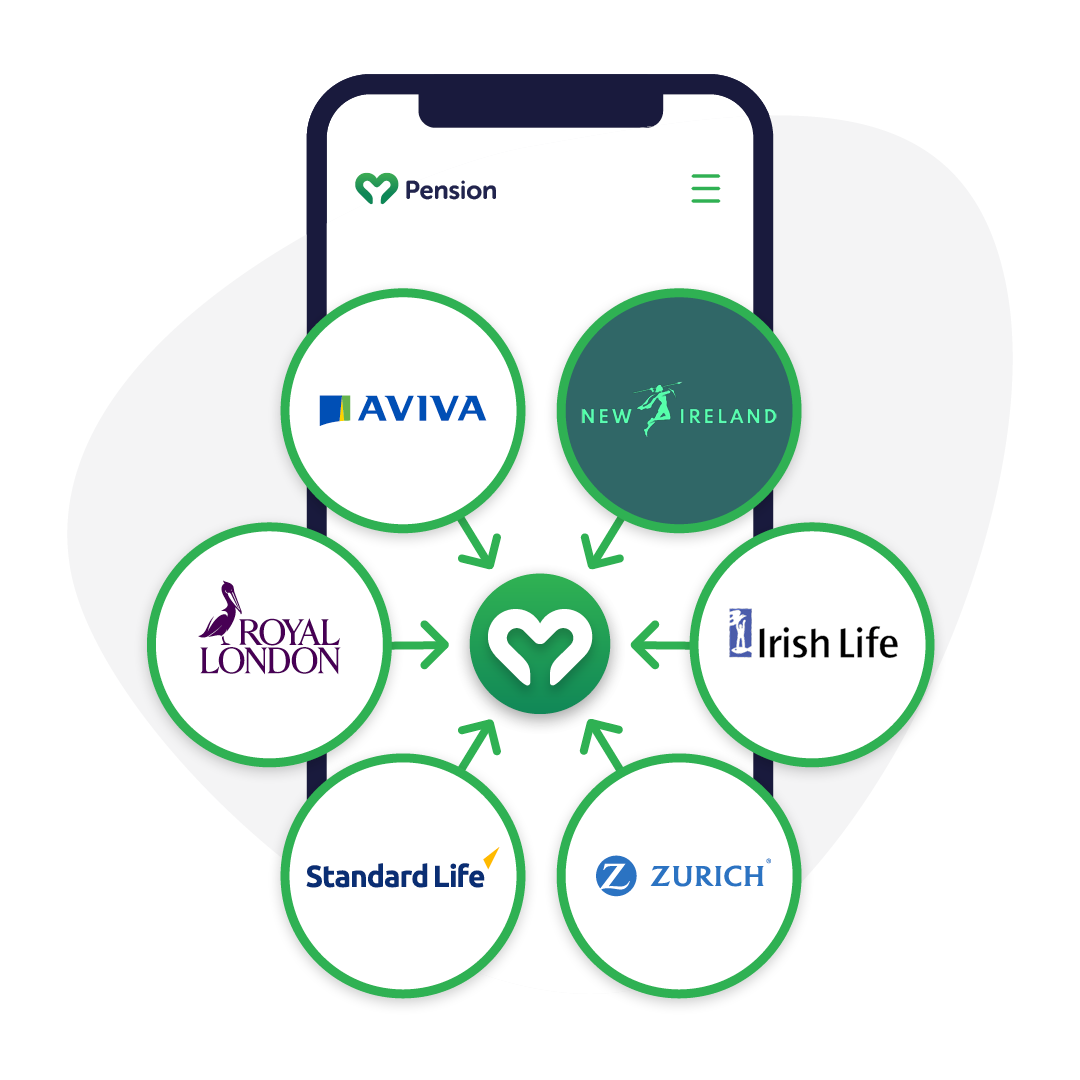
View all your pensions in one place. MyPension allows you to easily manage your pensions, with features such as combining, contributing and making withdrawals. Your pension, in the palm of your hands.
Be pension confident!
View all your pensions in one place. It takes just 5 minutes to sign up.



Cathedral Financial Consultants Ltd t/a My Pension is regulated by the Central Bank of Ireland. With pension investments, your funds might fluctuate in line with investment market movements.
Client services
Offices
Drogheda:
CFC,
Unit 2G, Southgate, Drogheda, Co. Meath, A92 YT2Y
Dundalk:
CFC,
16 Roden Place, Dundalk, County Louth, A91 N9CV
© Copyright 2026 Cathedral Financial Consultants Ltd t/a My Pension. Registered in Ireland No: 369995.