
What Happens to Your Pension When You Leave a Job in Ireland?
Leaving a job can be stressful enough without worrying about your pension. Whether you’re changing employers, becoming self-employed, emigrating, or facing redundancy, one of the biggest financial questions many people have is:
“What happens to my pension when I leave my job in Ireland?”
Understanding your pension options when leaving employment is essential because the choices you make now could significantly affect your retirement income later.
In this guide, we’ll break down exactly what happens to your pension when you leave a job in Ireland, the options available, and how to make the best decision for your long-term financial security.
What’s in this guide?
Understanding Your Pension Type First
What Are Your Main Pension Options When Leaving a Job?
What Happens to a PRSA When You Leave Employment?
What About Defined Benefit (DB) Pensions?
Should You Move Your Pension Into a Buy-Out Bond?
Tax Implications of Leaving a Job and Pension Transfers
Common Pension Mistakes to Avoid When Leaving a Job
Pension Checklist Before Leaving Employment
Is It Better to Leave or Transfer Your Pension?
Need Help Reviewing Your Pension Options?
Useful Links / Documents
Frequently Asked Questions About Pension Options When Leaving a Job in Ireland
Understanding Your Pension Type First
Before making any decisions, you need to know what kind of pension arrangement you currently have:
1. Occupational Pension Scheme (Company Pension)
This is a pension arranged through your employer.
2. PRSA (Personal Retirement Savings Account)
A personal pension product that can move with you between jobs.
3. Defined Contribution (DC) Pension
Your pension depends on contributions and investment performance.
4. Defined Benefit (DB) Pension
Your retirement income is based on salary and years of service.
Your pension type will determine what options are available when you leave employment.
What Are Your Main Pension Options When Leaving a Job?
In Ireland, there are generally three main pension routes when you leave an employer:
Option 1: Leave Your Pension Where It Is (Preserved Benefits)
If you have at least two years of qualifying service in an occupational pension scheme, you’ll usually be entitled to leave your pension in your former employer’s scheme until retirement. This is known as a preserved or deferred benefit.
Benefits:
- No immediate action required
- Pension remains invested
- Defined benefit entitlements may retain valuable guarantees
- Potentially lower fees than transferring
Drawbacks:
- Limited control
- Harder to track multiple pensions
- Investment options may be restricted
- You may lose active management opportunities
Option 2: Transfer Your Pension
Many people choose to move their pension when changing jobs.
Possible transfer destinations include:
Transfer to:
- Your new employer’s pension scheme
- A PRSA
- A Personal Retirement Bond (Buy-Out Bond)
- An overseas pension (in limited cases)
Revenue rules allow occupational pensions to be transferred to PRSAs, and many workers choose this for greater flexibility.
Benefits:
- Consolidates pensions
- Easier administration
- More investment control
- Potentially lower fees
- Greater retirement flexibility
Risks:
- Possible transfer costs
- Loss of valuable DB guarantees
- Poor transfer choices can reduce retirement income
Option 3: Refund of Contributions (Limited Cases)
If you have less than two years of pensionable service, you may be entitled to a refund of your own pension contributions.
Important:
- Employer contributions are usually forfeited
- Tax is deducted
- This is often the least tax-efficient option
This route may offer short-term cash, but it can severely reduce retirement savings potential.
What Happens to a PRSA When You Leave Employment?
If you already have a PRSA:
Your PRSA is portable
That means:
- You keep full ownership
- You can continue contributing independently
- Your new employer may contribute
- You can transfer to another pension later if needed
PRSAs are often simpler than occupational schemes because they are not tied to one employer.
What About Defined Benefit (DB) Pensions?
DB pensions can be more complex.
If you leave:
- You may preserve benefits within the scheme
- Transfer may be possible
- The transfer value may not reflect the full long-term value of guaranteed retirement income
Key Warning:
Defined benefit pensions often contain valuable guarantees, inflation adjustments, or spouse benefits that could be lost on transfer.
Professional advice is highly recommended before transferring a DB pension.
Should You Move Your Pension Into a Buy-Out Bond?
A Buy-Out Bond (Personal Retirement Bond) is a common option for Irish workers leaving employment.
Advantages:
- More control
- Potential early retirement access from age 50
- Broader investment options
- Pension remains separate from future employers
Potential Downsides:
- Charges vary
- Investment performance risk
- More responsibility for managing retirement planning
Tax Implications of Leaving a Job and Pension Transfers
Tax-Free:
- Most pension transfers between approved Irish pension vehicles are tax-neutral
Taxable:
- Refunds of contributions
- Early withdrawals outside permitted rules
- Some overseas transfers
Always verify tax treatment before making a pension move.
Common Pension Mistakes to Avoid When Leaving a Job
❌ Cashing out too early
Taking refunds can create major retirement shortfalls.
❌ Ignoring old pensions
Many people lose track of small pensions over time.
❌ Transferring without reviewing charges
Higher fees can erode long-term returns.
❌ Moving a DB pension without advice
Guaranteed benefits may be worth more than transfer value.
❌ Failing to update beneficiaries
Life changes should trigger pension reviews.
Pension Checklist Before Leaving Employment
Before you leave:
- Request your pension benefit statement
- Confirm your scheme type
- Check qualifying service length
- Review transfer options
- Compare fees and fund choices
- Seek regulated financial advice
- Update beneficiary details
Is It Better to Leave or Transfer Your Pension?
Leave It Where It Is If:
- You have a strong DB pension
- Charges are low
- Investment options are satisfactory
- You prefer minimal changes
Transfer It If:
- You want consolidation
- You seek greater flexibility
- You’re moving jobs frequently
- You want more investment choice
- Your current pension is underperforming
Need Help Reviewing Your Pension Options?
Leaving employment is one of the best times to review your pension strategy.
A pension review can help you:
- Maximise retirement income
- Reduce fees
- Consolidate pensions
- Avoid costly mistakes
- Build a clearer retirement roadmap
Don’t lose track of your pension when leaving a job in Ireland. Sign up with MyPension to review your options, consolidate old pensions, and take control of your retirement savings—helping you make smarter financial decisions for your future.
Useful Links / Documents
Pension Calculator
Find out your likely retirement income.
Find your old Workplace Pensions
Sign-up and find all of your pensions.
Frequently Asked Questions About Pension Options When Leaving a Job in Ireland
What happens to my pension when I leave a job in Ireland?
When you leave a job in Ireland, your pension does not disappear. Depending on your pension type and years of service, you may be able to leave it in your former employer’s scheme, transfer it to a new pension arrangement, move it into a PRSA or Buy-Out Bond, or in some cases receive a refund of contributions.
Can I leave my pension with my old employer when I change jobs?
Yes, if you have at least two years of qualifying service, you can usually leave your pension in your previous employer’s scheme as a preserved benefit until retirement. This option allows your pension to remain invested without immediate changes.
Can I transfer my pension to my new employer in Ireland?
In many cases, yes. You may be able to transfer your pension into your new employer’s pension scheme, a PRSA, or a Buy-Out Bond. Before transferring, it’s important to compare fees, benefits, and potential loss of guarantees.
What is a Buy-Out Bond and should I use one?
A Buy-Out Bond, also known as a Personal Retirement Bond, allows you to move your pension from a former employer into a personal policy that offers flexibility, investment choice, and retirement planning control. It may suit people who want greater independence over their pension.
Do I pay tax on my pension when leaving employment in Ireland?
Most approved pension transfers are tax-free in Ireland. However, refunds of contributions or certain early withdrawals may be subject to tax. Understanding Revenue rules is important before making pension decisions.
Should I transfer or keep my old pension?
The best option depends on your pension type, fees, investment choices, and retirement goals. Defined benefit pensions may offer valuable guarantees, while transferring can provide flexibility and consolidation. Reviewing your options carefully can help maximise long-term retirement benefits.
Take control of your retirement, with MyPension
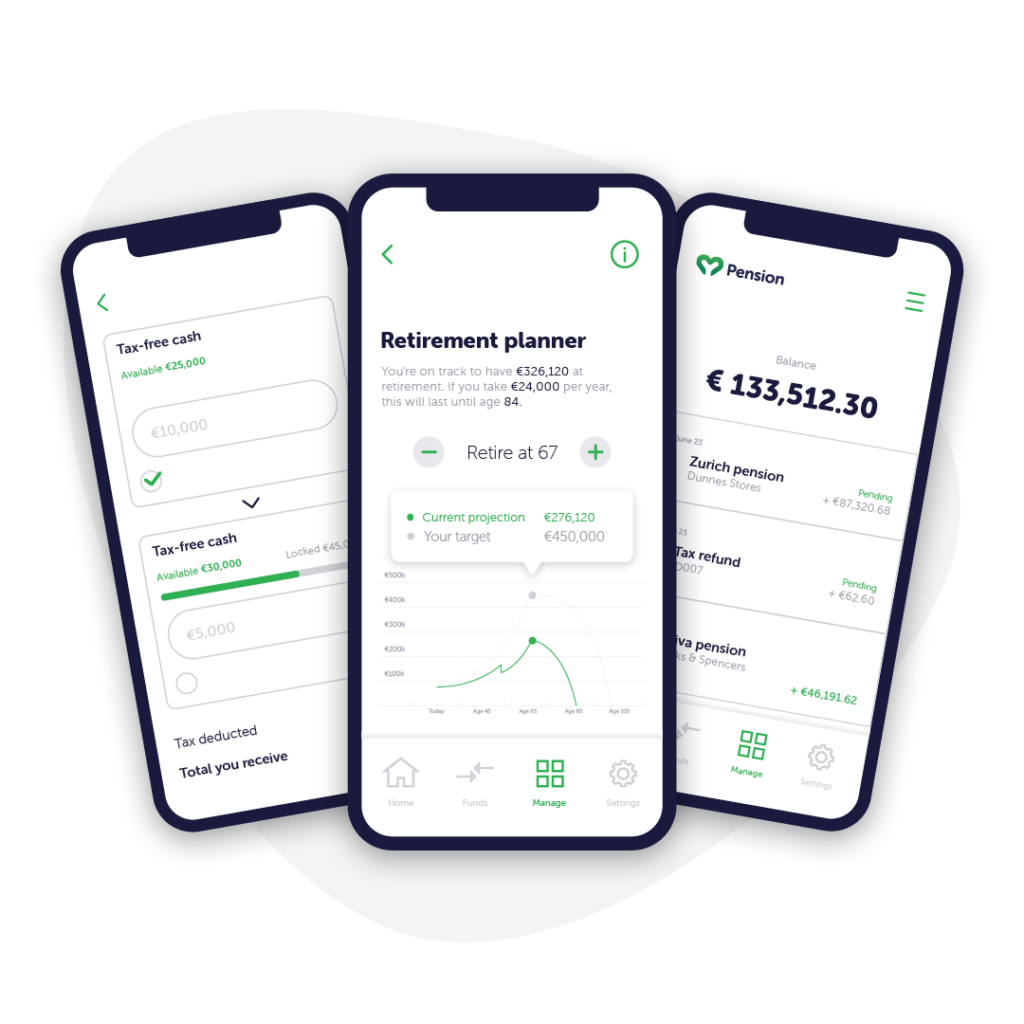
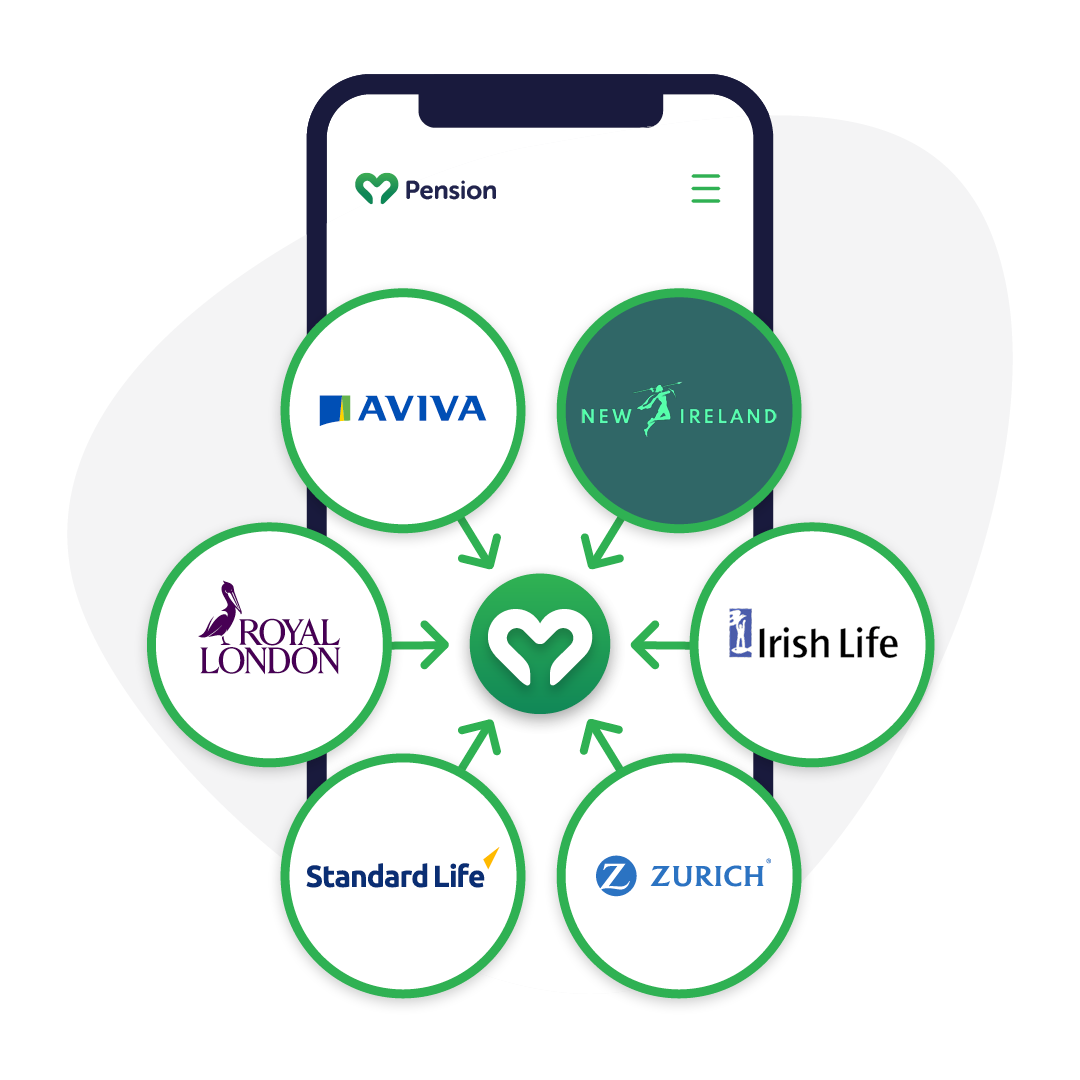
View all your pensions in one place. MyPension allows you to easily manage your pensions, with features such as combining, contributing and making withdrawals. Your pension, in the palm of your hands.
Be pension confident!
View all your pensions in one place. It takes just 5 minutes to sign up.



Cathedral Financial Consultants Ltd t/a My Pension is regulated by the Central Bank of Ireland. With pension investments, your funds might fluctuate in line with investment market movements.
Client services
Offices
Drogheda:
CFC,
Unit 2G, Southgate, Drogheda, Co. Meath, A92 YT2Y
Dundalk:
CFC,
16 Roden Place, Dundalk, County Louth, A91 N9CV
© Copyright 2026 Cathedral Financial Consultants Ltd t/a My Pension. Registered in Ireland No: 369995.