
Types of pensions in Ireland
In Ireland, there are several types of pensions designed to help you plan for retirement and secure your financial future. These include the State Pension, which provides a basic income from the government, as well as occupational pensions offered by employers and personal pensions that individuals can set up themselves. Each type of pension works differently, with varying rules, benefits, and tax advantages. Understanding the options available is an important step in making sure you have the right plan in place for your retirement goals.
What’s in this guide?
Different types of pensions in Ireland
Occupational / workplace pensions in Ireland
Personal pensions in Ireland
Executive pensions in Ireland
Self Administered Pensions (SSAPS) in Ireland
State pension in Ireland
Useful links / documents
Different types of pensions in Ireland
When planning for retirement, many people wonder what are the different types of pension plans available and which is the best type of pension to suit their needs. In Ireland, there are several different types of pensions to choose from, including the State Pension, occupational pensions, and personal pension plans. Each of these types of pension schemes works in a different way, offering unique benefits, rules, and tax advantages. By understanding the different types of pension plans and the types of pension funds available, you can make informed decisions about your future. If you’ve ever asked yourself, what types of pensions are there or want to compare the different types of pension schemes in Ireland, this guide will help you explore your options.
Occupational / workplace pensions in Ireland
Occupational Pensions in the Private Sector
In the private sector, there are two main types of occupational pensions available:
- Company Pension Scheme – offered directly by your employer.
- Personal Retirement Savings Account (PRSA) – which your employer is legally required to provide access to if no company pension scheme is in place.
Company Pension Scheme
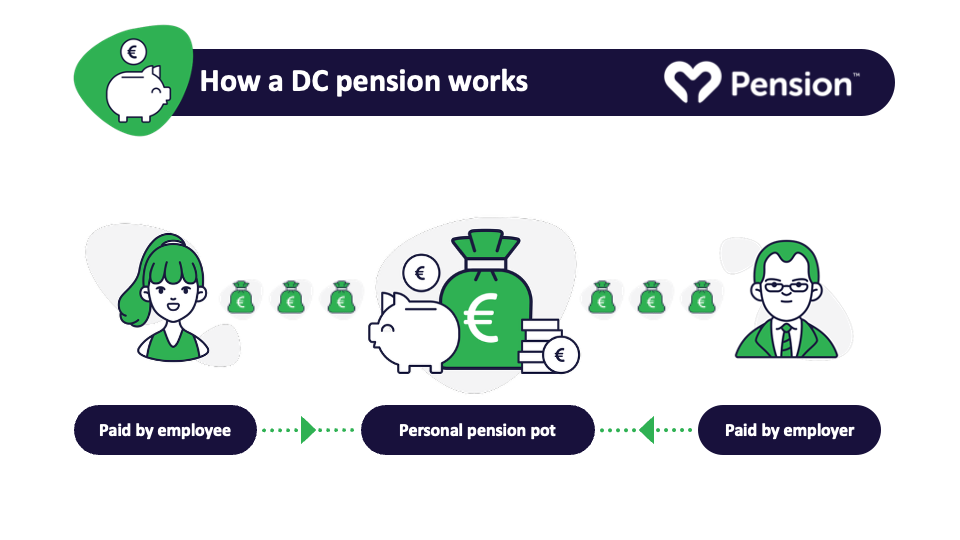
A defined contribution company pension, also known as an occupational pension, is set up by your employer. Employees usually contribute a fixed percentage of their salary, with the option to adjust contributions over time. The aim is to build a retirement fund that will provide income in later years.
A key advantage of company pensions is that many employers contribute on behalf of their employees, significantly boosting retirement savings.
Example:
Mary works at a marketing firm and earns €60,000 per year. Her employer matches pension contributions up to 5%. Mary pays 5% of her salary (€250) into her pension each month, and her employer contributes another 5% (€250). This gives Mary €500 per month going into her pension. On top of this, she benefits from 40% tax relief on her contribution, saving €100 each month. So, while €500 goes into her pension, it only costs Mary €150.
Personal Retirement Savings Account (PRSA)
A Personal Retirement Savings Account (PRSA) is an individually owned pension that offers flexibility and portability. You can contribute regularly (weekly, monthly, annually) or pause contributions at any time.
PRSA contributions qualify for income tax relief (within certain limits), and any investment growth inside the fund is tax-free. At retirement, you may be able to take part of your PRSA as a tax-free lump sum, subject to rules and limits.
Contributions
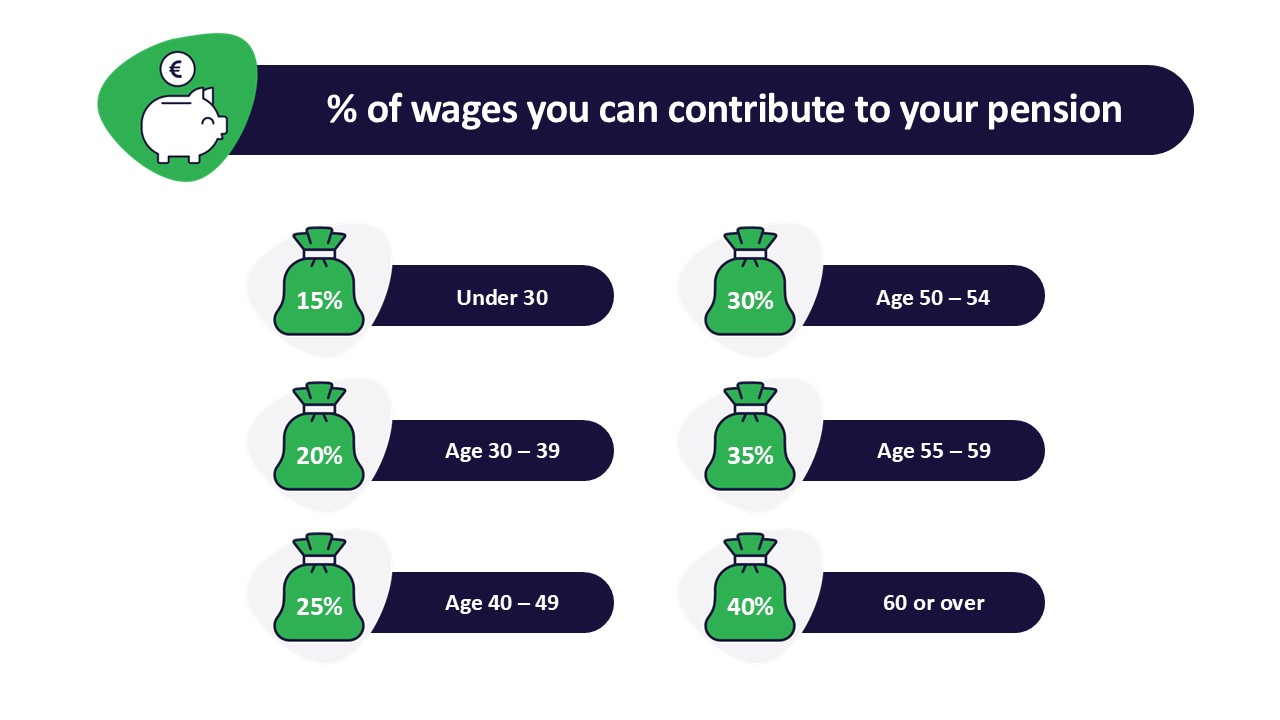
The amount you can contribute to your pension and still receive income tax relief depends on your age and earnings. The table below shows the maximum percentage of your income that qualifies for tax relief.
Tax relief is capped at a maximum salary of €115,000 per year. This means that if you earn above this amount, you can only claim relief on contributions calculated up to €115,000.
For professional athletes, the contribution limit is set at 30% of earnings, regardless of age.
Find out more: https://mypension.ie/what-is-an-occupational-pension/
Personal pension plans (PPP) in Ireland
Personal Pension Plans (PPPs) are usually offered by insurance companies and can also be arranged through MyPension. With so many options available, choosing the best type of pension plan can feel overwhelming. That’s why our Advisors are here to guide you in finding a plan that aligns with your retirement goals.
When you contribute to a PPP, the insurance company invests your money into one or more funds with the aim of generating long-term growth. These investments may include company shares, government bonds, and property.
It’s important to be aware that insurance companies apply certain charges to PPPs, which are deducted from your contributions or fund value. These may include setup fees, fund management fees, allocation rates, bid/offer spreads, or fund switching charges. While these costs can affect the overall value of your pension, they will always be outlined in the plan’s key features document. Your Financial Advisor can also help you calculate the impact of charges and give you a clear picture of expected returns based on projected annual growth.
When You Can Access Your Pension
You can draw on your pension savings in the following situations:
-
Between ages 60 and 75: You can access your PPP funds anytime from age 60 up to age 75. It’s not necessary to retire or stop working—you simply need to be within this age range.
-
Serious Ill Health: If you are permanently unable to work due to serious illness, you may be allowed to access your pension at any age. This requires Revenue approval and is only permitted in exceptional cases.
-
From age 50 for certain occupations: Some professions, such as professional athletes (e.g., golfers, rugby players, jockeys), may allow pension access from age 50, reflecting the earlier retirement age common in these careers.
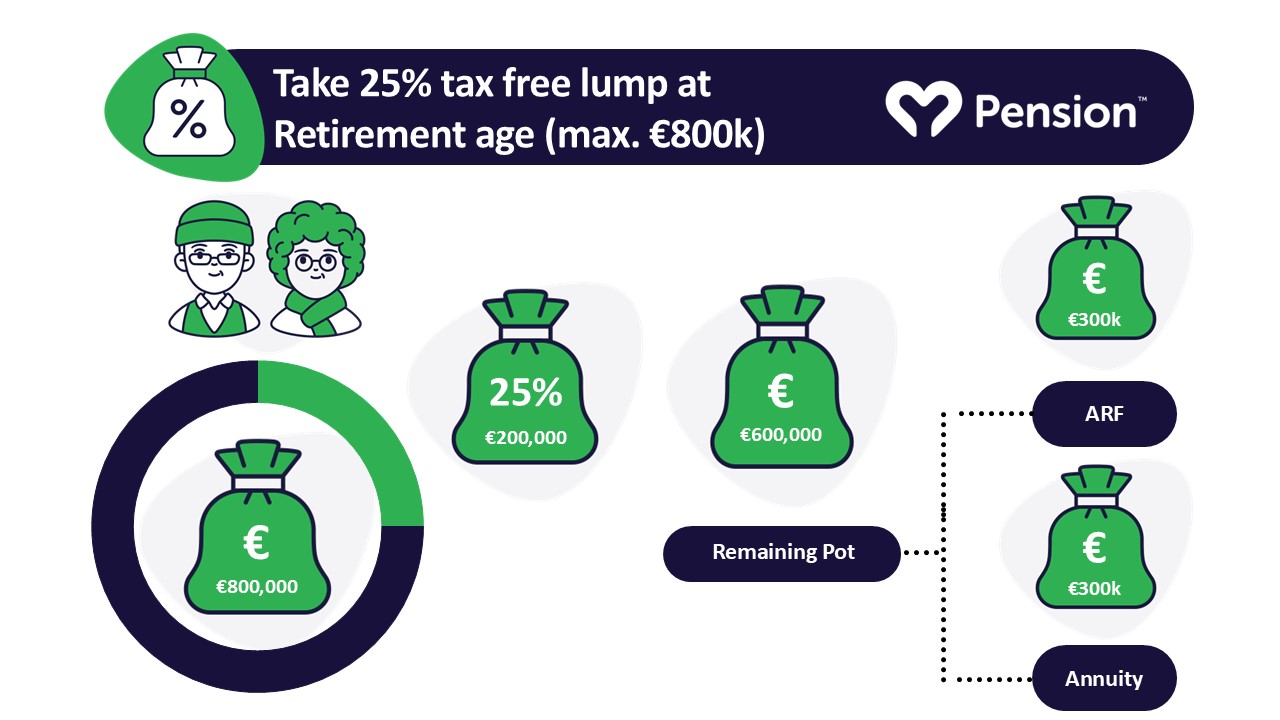
When you start taking benefits from your PPP, you can usually withdraw a tax-free lump sum of 25% of your fund, up to a lifetime maximum of €200,000. The remaining balance can then be managed in several ways, depending on your chosen retirement option.
Options at Retirement
-
Approved Retirement Fund (ARF): You can invest the remaining balance of your pension into an ARF. This allows your money to continue growing tax-free, while also giving you flexible access to your funds in retirement.
-
Annuity: Another option is to purchase an annuity, which provides you with a guaranteed regular income for life, or for a set period, depending on the type of annuity you choose.
-
Taxable Lump Sum: You may also decide to take the balance as a lump sum. This amount will be treated as taxable income in line with current tax rules and regulations.
Find out more: https://mypension.ie/what-is-a-personal-pension/
Executive pensions in Ireland
Executive pensions are company-sponsored retirement plans created specifically for senior executives and business owners. These schemes are established under trust, with the employer usually acting as trustee. Contributions can be made by both the employer and the executive, providing a highly tax-efficient way to build retirement savings. Executive pensions also offer flexible contribution limits, making them an attractive option for those seeking tailored retirement planning.
What Are the Benefits of an Executive Pension?
An executive pension provides a range of advantages that go beyond those available in standard pension schemes.
-
Higher contribution limits: Executives can contribute a larger share of their income while still receiving full tax relief.
-
Company contributions: Employers can make contributions on behalf of the executive, without any PRSI liability.
-
Early access: Benefits can be accessed from as early as age 50.
-
Larger tax-free lump sum: At retirement, up to 25% of the total fund can be taken as a tax-free lump sum, compared with just 20% in standard schemes.
These features make executive pensions a highly attractive option for senior executives and business owners who want greater flexibility and efficiency in planning for retirement.
Who Is Eligible for an Executive Pension?
-
Company Directors: Both owner-directors (those holding a significant share in the company) and non-owner directors may qualify for an executive pension.
-
Senior Executives: Key employees in senior managerial or executive positions, even if they are not shareholders, can also be eligible.
-
Employees with a Contract of Employment: The individual must have a formal employment arrangement with the company, supported by a permanent or fixed-term contract.
-
Company Control: Directors who own more than 20% of the business may need additional approval from Revenue to make large contributions or to access benefits early.
Who Is Not Eligible for an Executive Pension?
-
Self-employed individuals: Those without a formal company structure cannot establish an executive pension. Instead, they may consider alternatives such as a Personal Pension or a PRSA (Personal Retirement Savings Account).
-
Non-executive employees: Staff without executive status, or those already included in a general occupational pension scheme, are not eligible for the specific advantages of an executive pension.
Find out more: https://mypension.ie/what-is-an-executive-pension/
Self Administered Pensions (SSAPS) in Ireland
A Small Self-Administered Pension Scheme (SSAPS) is a type of pension plan usually made up of fewer than twelve members. It is commonly established by a company for the benefit of an employee or director, giving the individual greater flexibility and control over how their pension funds are invested.
SSAPS are most often used by proprietary directors of private companies, meaning those who own or control at least 15% of the company’s ordinary share capital.
Who Can Set Up a Small Self-Administered Pension Scheme (SSAP) in Ireland?
In Ireland, an employee can establish a Small Self-Administered Pension Scheme (SSAP) with their employer’s approval. Setting up a SSAP involves a few key parties:
-
Member Trustee: This is you—the employee who sets up the scheme. As the member trustee, you oversee the SSAP and have direct control over the investment strategy and management of your pension fund.
-
Employer: Your employer must approve the establishment of the SSAP and may also choose to contribute to the scheme.
-
Trustees: Alongside you as the member trustee, trustees are responsible for running the SSAP. They handle investment decisions, ensure compliance with legal and regulatory rules, and manage the payment of retirement benefits.
In short, the trustees—especially you as the member trustee—play a vital role in steering the SSAP. Their decisions directly influence how your pension grows and how well it supports your retirement goals.
Is a Small Self-Administered Pension Scheme Right for Me?
A Small Self-Administered Pension (SSAP) can be an excellent option for those who are eligible to use it. With over 90% of businesses in Ireland classified as small or medium-sized enterprises (SMEs), many run by owner-directors, this type of pension is particularly well-suited to company directors seeking more control over their retirement planning.
Established under trust by a company’s directors, an SSAP offers flexibility and control over how retirement savings are invested. This means directors can tailor their pension strategy to match their personal financial goals, while also benefitting from attractive tax advantages.
If you’re an owner-director who values autonomy and strategic control over your retirement fund, an SSAP is well worth considering.
To explore whether an SSAP is the right fit for you, speak with one of our Financial Advisors today.
Find out more: https://mypension.ie/what-is-a-self-administered-pension-ssaps/
State pension in Ireland
Eligibility for the State Pension (Contributory)
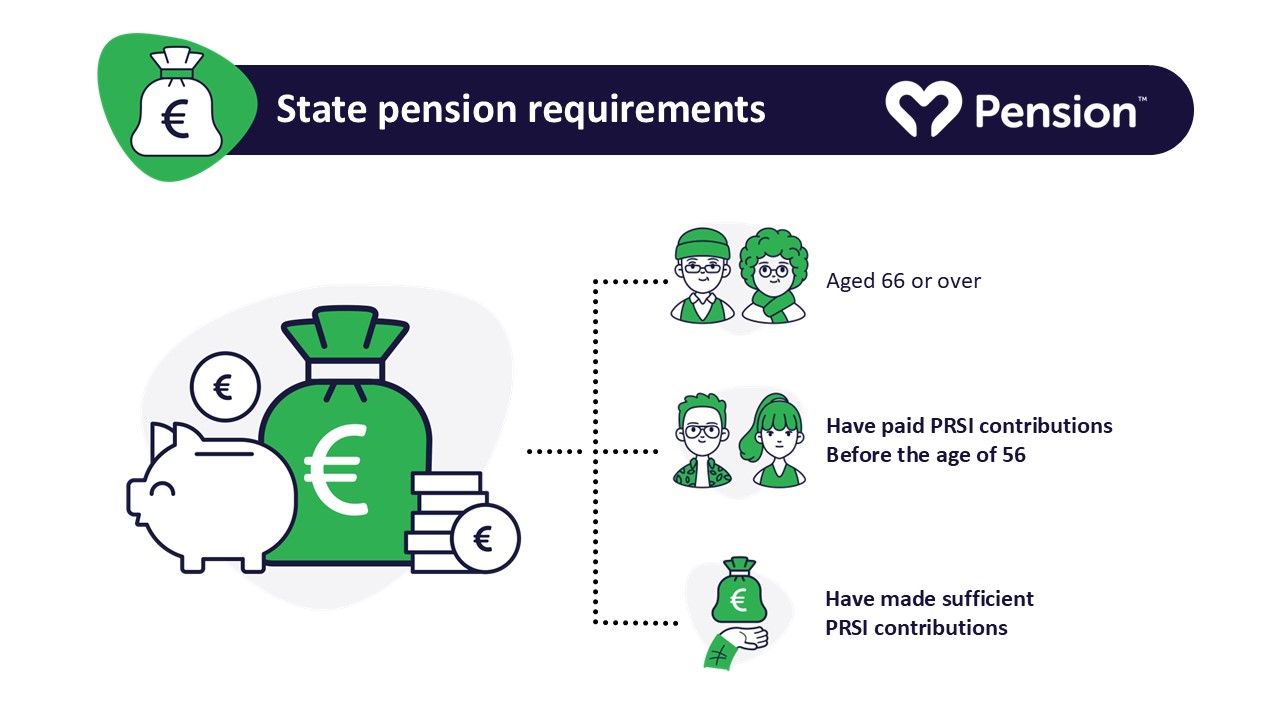
To qualify for a State Pension (Contributory) in Ireland, you must meet certain PRSI contribution requirements:
-
You need a minimum of 520 paid contributions (equivalent to 10 years) from the time you first entered insurable employment up to the end of the tax year before reaching pension age.
-
Of these, at least 260 contributions must be compulsory (paid), while the remaining 260 can be voluntary contributions.
-
Your pension rate may be increased by including credited contributions or by receiving credits for periods spent in caring roles, provided these periods are under 20 years.
In addition, to claim the contributory pension at age 66, you must have started insurable employment before turning 56.
You can check your full social insurance record—including paid and credited contributions—on your Contribution Statement, which gives a complete overview of your PRSI history.
Find out more: https://mypension.ie/what-is-the-state-pension/
State Pension (Contributory) – 2025 Rates
-
From January 2025, the maximum personal weekly rate for those under age 80 is €289.30—an increase of €12 per week compared to 2024.
-
This equates to approximately €15,031 annually (289.30 × 52 weeks) and around €41.34 per day (289.30 ÷ 7 days).
-
For pensioners aged 80 and over, the maximum rate rises to €299.30 per week.
Useful links / documents
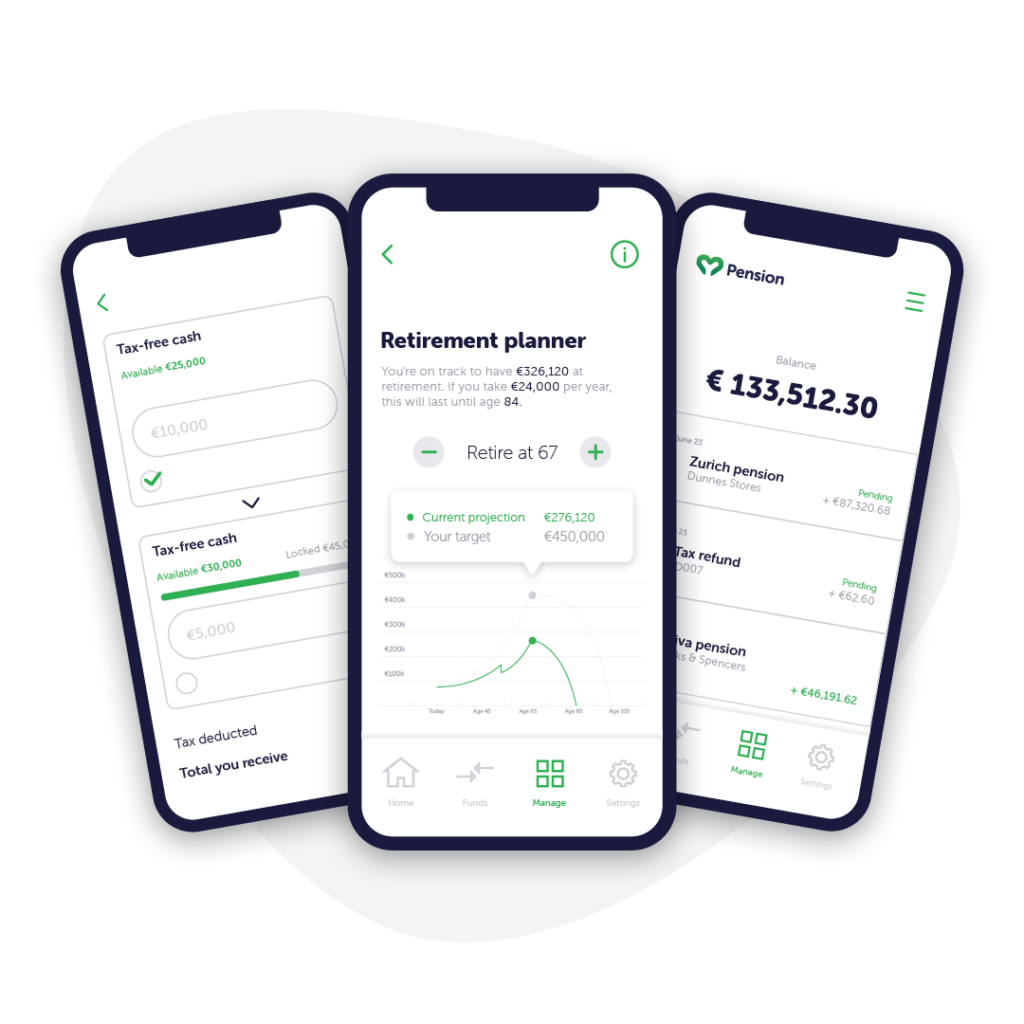
Pension Calculator
Find out your likely retirement income.
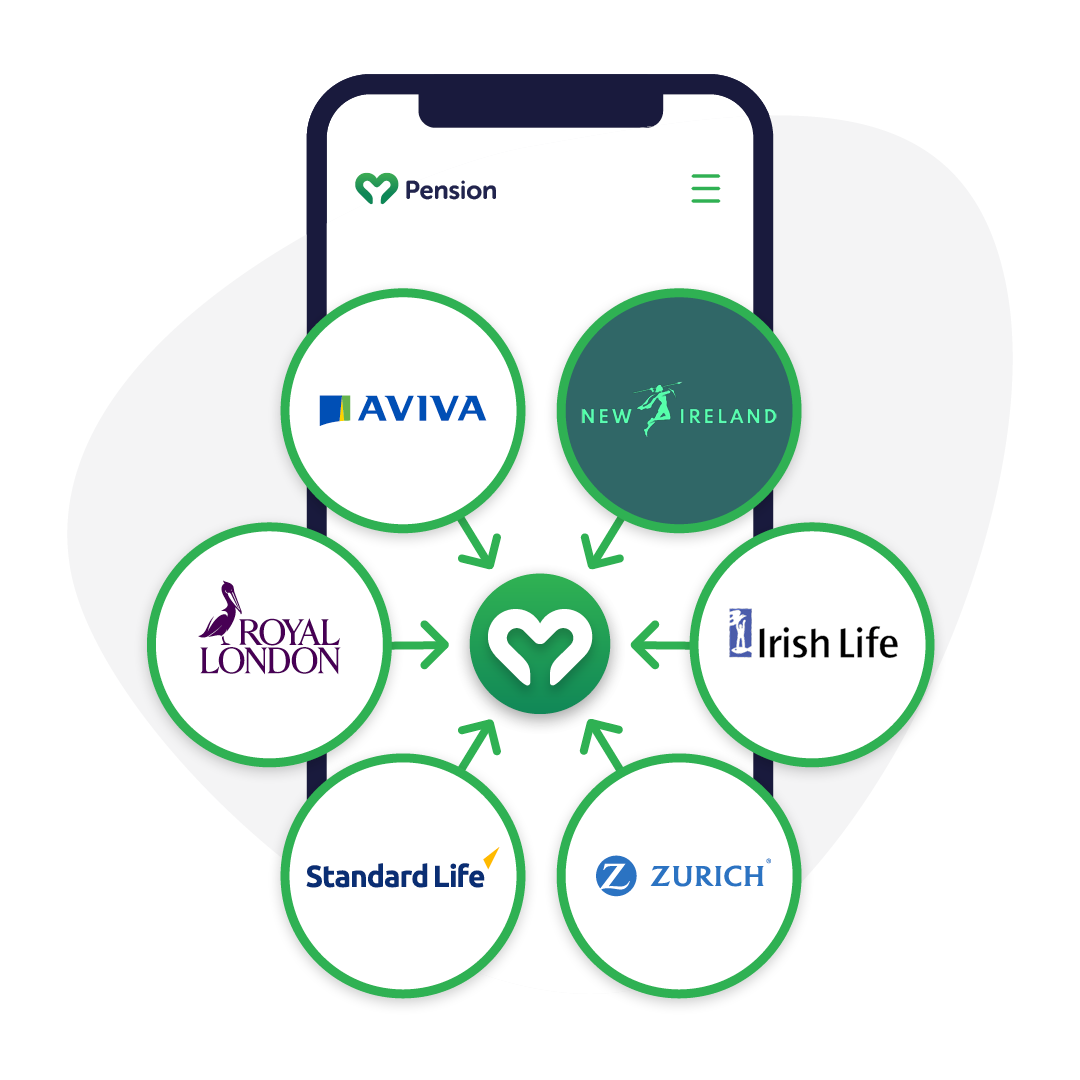
Find your old Workplace Pensions
Sign-up and find all of your pensions.
Be pension confident!
View all your pensions in one place. It takes just 5 minutes to sign up.



Cathedral Financial Consultants Ltd t/a My Pension is regulated by the Central Bank of Ireland. With pension investments, your funds might fluctuate in line with investment market movements.
Client services
Offices
Drogheda:
CFC,
Unit 2G, Southgate, Drogheda, Co. Meath, A92 YT2Y
Dundalk:
CFC,
16 Roden Place, Dundalk, County Louth, A91 N9CV
© Copyright 2026 Cathedral Financial Consultants Ltd t/a My Pension. Registered in Ireland No: 369995.